
Dental implant surgery is widely regarded as the gold standard in tooth replacement, but understanding what happens after you leave the chair is just as important as the procedure itself. The recovery process is a multi-phase journey that requires patience, proper care, and realistic expectations. Knowing what to expect at each stage helps you feel confident heading into treatment and set yourself up for long-term success.
At Premier Implants & Dentures in Garden City, GA, we emphasize that implant surgery is minimally invasive and is often described as less painful than a simple tooth extraction. Thanks to IV sedation and our commitment to ensuring every patient is completely comfortable, the procedure itself tends to be far less daunting than most anticipate. Recovery, when approached correctly, is equally manageable.
The First 48 to 72 Hours
The initial days after dental implant surgery are when you will notice the most noticeable symptoms. Some swelling, mild bruising, and tenderness around the surgical site are completely normal and typically peak within the first two to three days before beginning to subside. Minor bleeding during the first 24 hours is also common and generally resolves on its own.
During this window, rest is your most important task. Avoid strenuous physical activity, keep your head elevated when lying down, and stick to soft foods that require little to no chewing. Think yogurt, mashed potatoes, scrambled eggs, and smoothies. Pain medication and anti-inflammatory prescriptions will be provided to keep you comfortable, and most patients find that discomfort is very manageable during this phase.
The First Two Weeks
By the end of the first week, most patients report that the initial discomfort has significantly faded. Gum tissue around the implant site begins to heal visibly, and many people feel ready to return to work within one to two days of the procedure. The first two weeks are largely about protecting the surgical site while your body begins the healing process in earnest.
You should avoid hard, crunchy, or sticky foods during this period. It is also important to stay away from smoking and alcohol, both of which impair circulation and can slow tissue healing. Gentle oral hygiene around the implant site, as directed by our team, will help prevent infection and keep healing on track. According to a study published on PMC, secondary prosthetic placement is typically performed three to six months following implant surgery, reinforcing why protecting the site early on plays such a critical role in the overall outcome.
Osseointegration: The Core of the Healing Process
The most significant phase of implant recovery is osseointegration, the biological process by which the titanium implant post fuses with the surrounding jawbone. This is what gives implants their remarkable strength and stability, making them feel and function like natural teeth.
Osseointegration typically takes between three and six months, depending on factors such as bone density, overall health, and adherence to post-operative instructions. During this period, you may feel mostly normal from day to day, but the real work is happening beneath the surface.
This is also why it matters to think long-term: understanding how long dental implants last starts with how well you support this phase of healing.
Factors That Influence Healing Speed
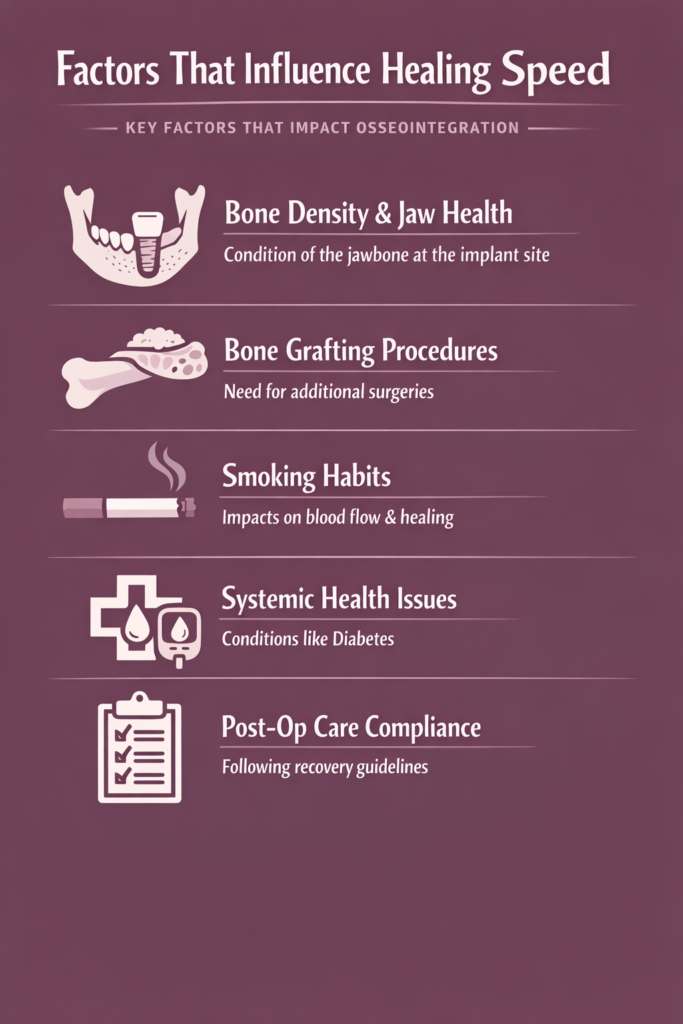
Several variables can affect how quickly and effectively osseointegration occurs. Being aware of them helps you make choices that support a successful outcome. These include:
- Bone density and overall jawbone health at the implant site
- Whether additional procedures like bone grafting were required
- Smoking habits, which are known to compromise blood flow and healing
- Systemic health conditions such as uncontrolled diabetes
- Consistency with post-operative care instructions
Each of these factors plays a role, which is why our team conducts a thorough evaluation before recommending implants.
Long-Term Recovery and Implant Maintenance
Once osseointegration is confirmed, the final crown or prosthetic restoration is placed, completing the process. At this point, your implant should feel indistinguishable from a natural tooth. However, long-term success depends on the habits you build going forward. Regular brushing, flossing, and professional hygiene appointments are essential to maintaining both the implant and the health of the surrounding gum tissue.
Unlike many implant centers, we provide dedicated hygiene and maintenance care for implant prosthetics right here in our practice. This means you have expert support throughout the life of your implant, not just during the surgical phase. Developing habits that protect your smile is one of the most important investments you can make after your procedure is complete.
Begin Your Journey at Premier Implants & Dentures
At Premier Implants & Dentures, Dr. William Verrillo completed a Clinical Residency in Implant Dentistry through the Advanced Dental Implant Institute and the University of Puerto Rico Medical Science Campus, earned a Zest Mastership in implant denture prosthetics, and holds an IV Sedation Certification to ensure every patient remains comfortable throughout treatment. He was granted early acceptance to Creighton School of Dentistry after just two years of undergraduate study, reflecting a standard of excellence that carries through every aspect of our care.
If you have questions about recovery or would like to discuss whether dental implants are right for you, we invite you to reach out through our contact form. Our team is here to walk you through every step of the process with the expertise and personalized attention you deserve.